The way people discover and evaluate brands is changing. Instead of entering a keyword, opening several links, and piecing together the information themselves, users can now ask ChatGPT, Google AI, or another AI assistant for a complete answer – often featuring only a small selection of brands and sources.
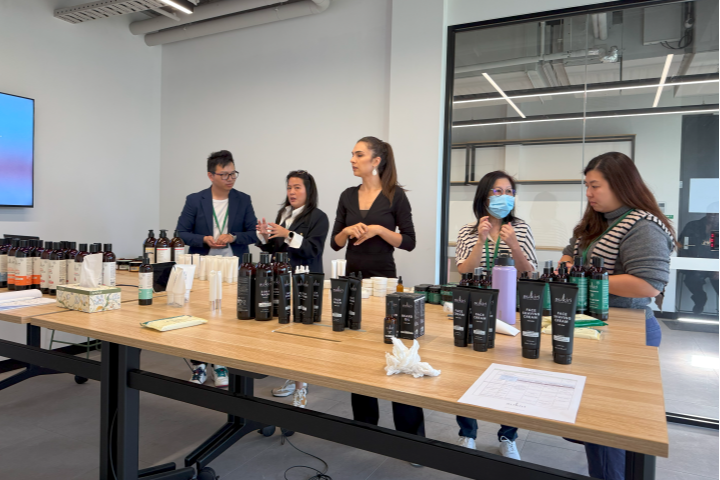
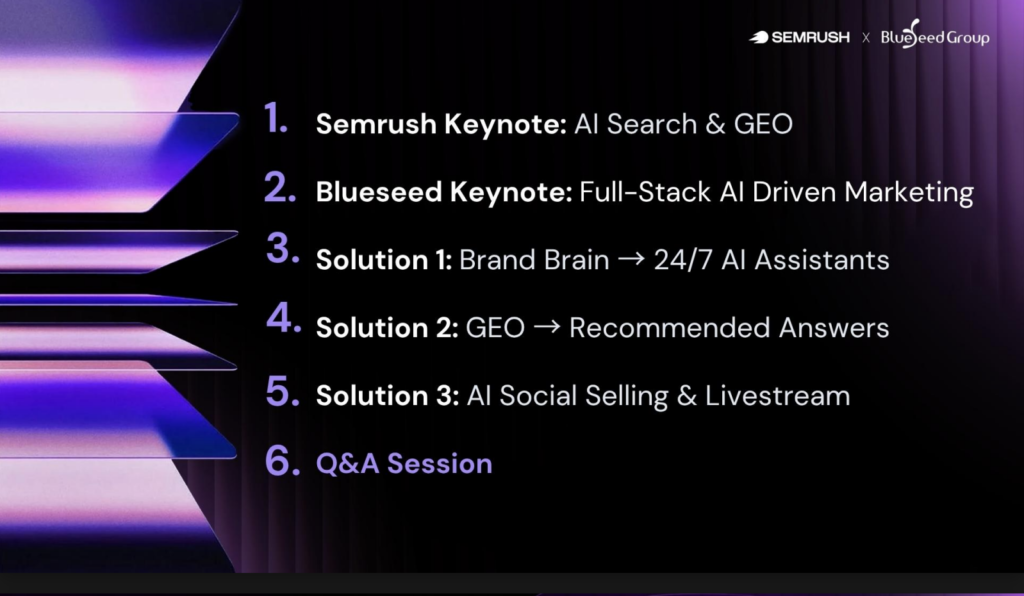
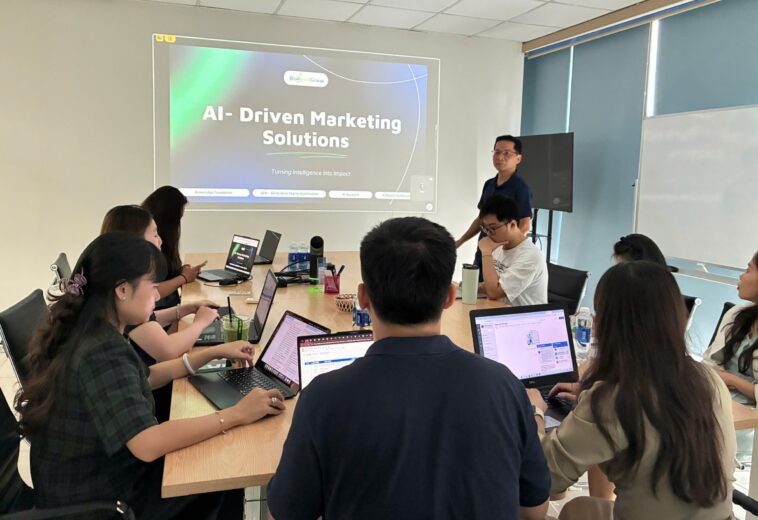
At “AI Visibility: From Measurement to Business Impact” Blueseed Group and Semrush brought together experts to examine this shift through three connected lenses: AI Search and GEO, Full-Stack AI-Driven Marketing, and growth applications such as AI Assistants and AI Social Selling/Livestream.
One message connected every session: visibility alone is no longer enough. A brand needs to be accurately understood, trusted, cited, and recommended by AI at the right moment. More importantly, that visibility must connect to measurable business action.
Search is moving from clicks to answers
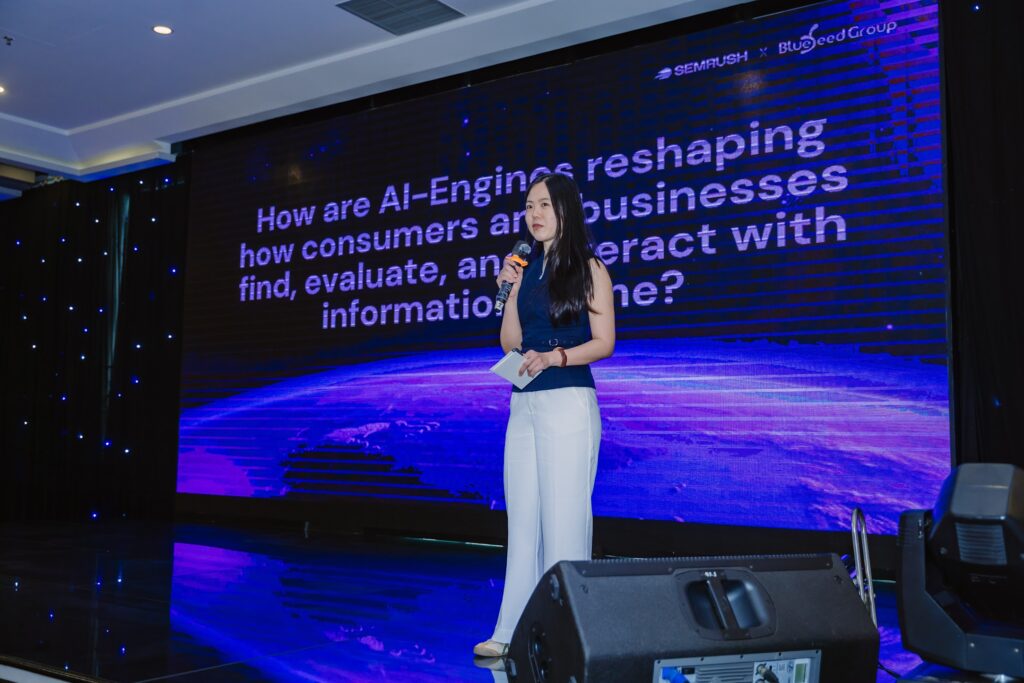
In the opening keynote, Ms. Samantha Chai, Strategic Partnerships Lead APAC & ANZ at Semrush, explored how AI engines are reshaping the way consumers and businesses find, evaluate, and interact with information online.
The figures presented at the event illustrate the speed of this transition:
- 78% of Vietnam’s online population had engaged with AI in Q1 2025, with roughly one-third using it as a daily habit.
- ChatGPT led usage among the platforms covered in the study, followed by Gemini and Meta AI.
- AI Search traffic is projected to surpass traditional search traffic in 2028.
- According to the data presented, the average LLM visitor may be worth 4.4 times as much as the average traditional organic search visitor.
This changes the underlying logic of Search. The familiar journey was Search – Click – Visit. Today, it can become Prompt – Brand or Product Mention – No Click.
As a result, traffic and keyword rankings no longer provide a complete view of brand discovery. Businesses increasingly need to track new signals, including Share of Voice in AI answers, Brand Visibility, Mentions, Citations, Source Visibility, and Sentiment.
AI is influencing the entire customer journey
AI Search does not affect awareness alone. AI can take part in every stage of the customer journey: discovering a need, comparing options, finding a place to buy, reviewing customer feedback, and shaping post-purchase recommendations.
This creates a new digital divide:
- People look for immersive experiences, personalization, social proof, and trust.
- AI agents look for structured content, authoritative signals, actionability, and verifiable data.
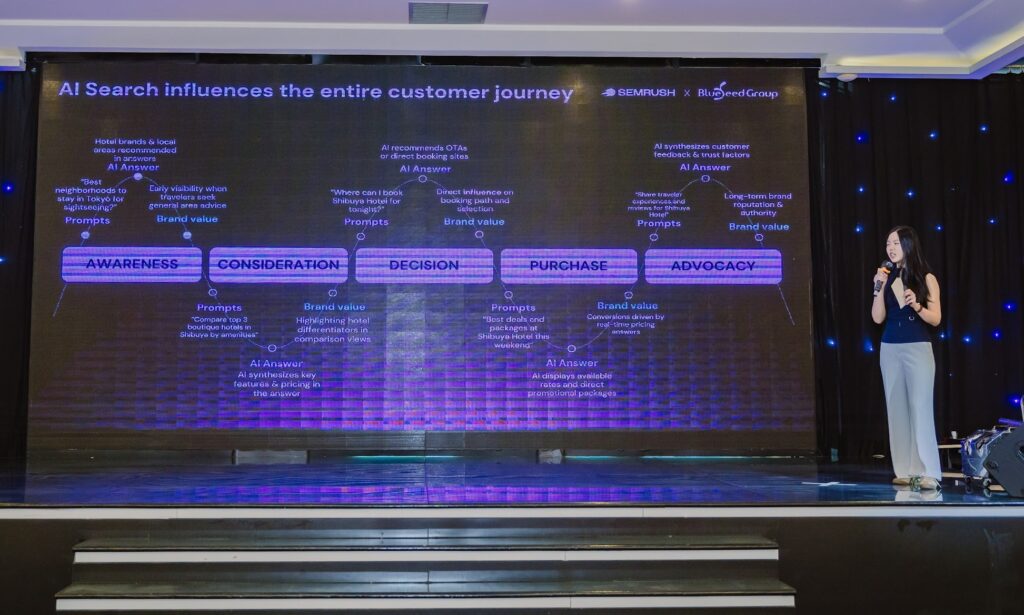
Winning brands need to serve both. Their content must remain useful and persuasive for people while being clear, structured, and trustworthy enough for machines to retrieve, understand, and use.
SEO and GEO work together
One of the event’s most important points concerned the relationship between SEO and GEO/AEO. They are not competing strategies.
SEO continues to provide the technical foundation: crawlability, site performance, structured data, backlinks, keywords, and rankings. GEO introduces an additional optimization layer around prompts, visibility within AI-generated answers, sentiment, sources influencing AI outputs, contextual content structure, and AI hallucination monitoring.
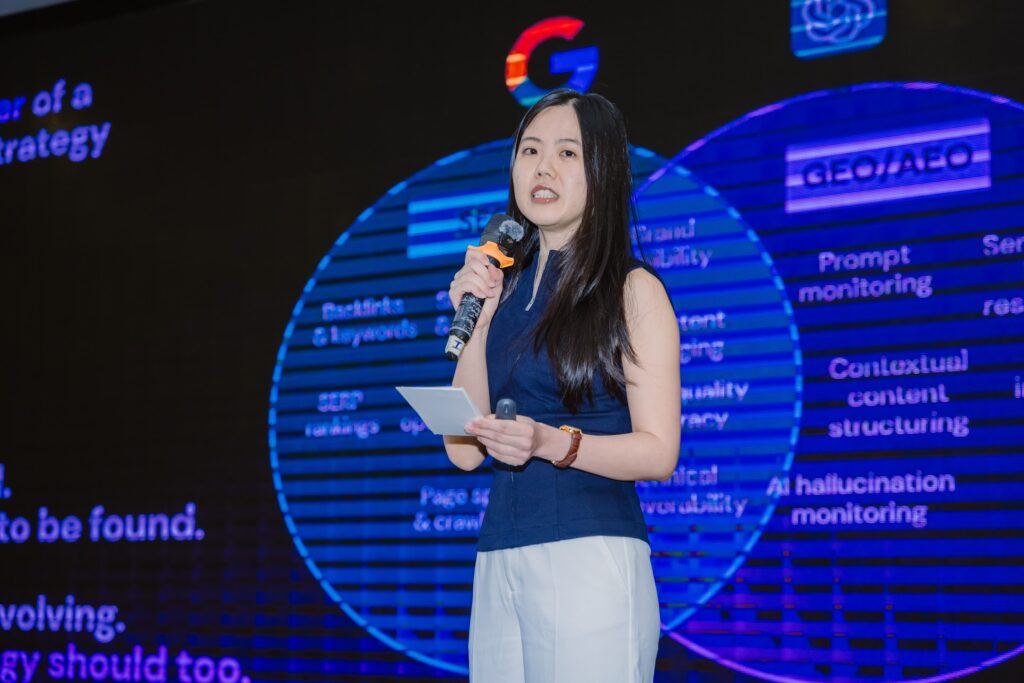
The intersection creates the strongest advantage: consistent messaging, accurate content, technical discoverability, and trusted source signals.
In other words, brands need a unified strategy that helps them both get found through Search and get chosen in AI-generated answers.
Full-Stack AI-Driven Marketing: from data to growth
In the Blueseed keynote, Mr. Nguyen Tan Ho, CEO of Blueseed Group and Founder of Optimind AI, explained how the marketing operating system is changing across three layers:
- Discover: search results are becoming AI-generated answers.
- Engage: static campaigns are becoming context-aware conversations.
- Operate: fragmented data is becoming a governed Brand Brain.
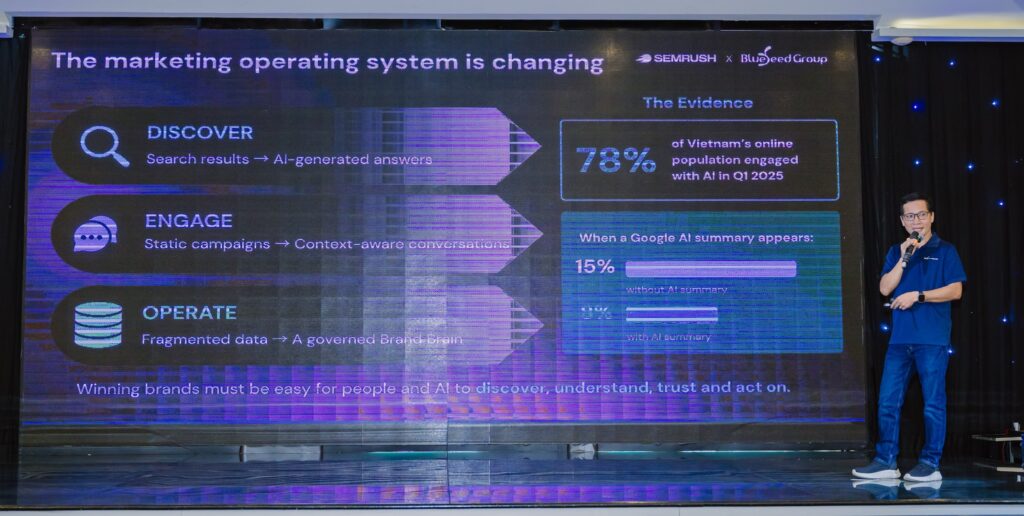
Blueseed’s Full-Stack AI-Driven Marketing model brings these layers together through five levels:
- L0 – Knowledge Foundation: product, customer, brand, and market knowledge.
- L1 – Insight & AI Visibility: prompt demand, social listening, AI mentions, and competitor intelligence.
- L2 – Content & Experiences: AI content engines, GEO execution, and conversational experiences.
- L3 – Media & Performance: smart bidding, dynamic creative, and predictive budgeting.
- L4 – CRM, CDP & Customer Journey: lead scoring, next-best action, and retention.
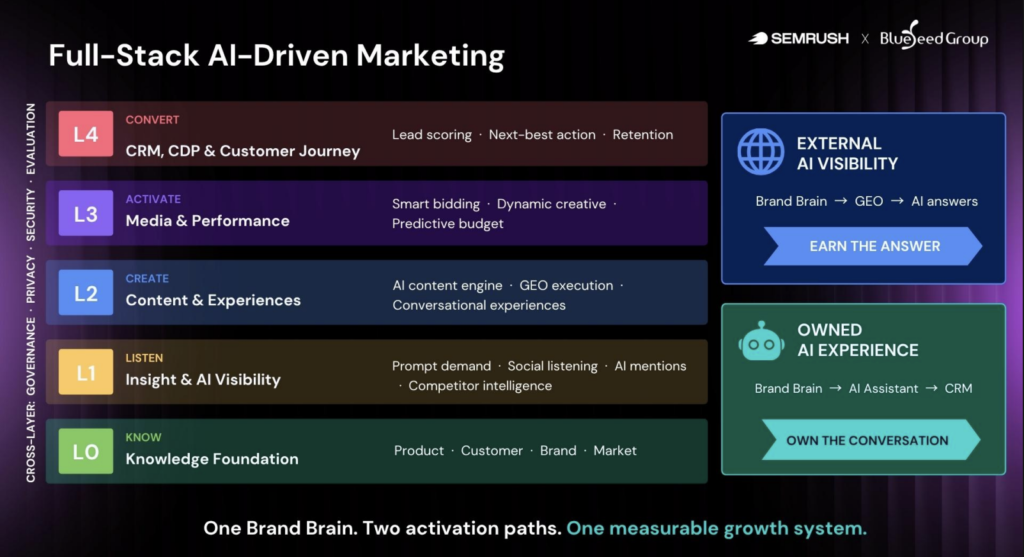
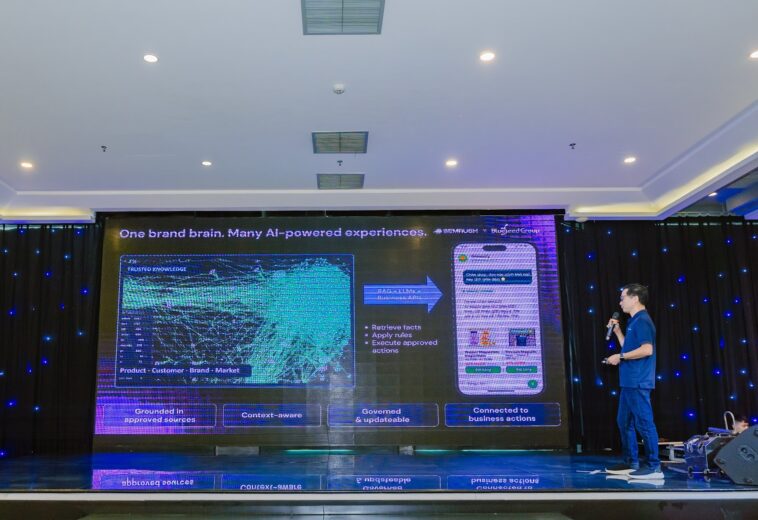
At the center is the Brand Brain: a connected, structured, governed, and synchronized knowledge foundation. Instead of allowing AI to make assumptions from fragmented information, the Brand Brain enables answers to be grounded in approved sources, adapted to context, kept up to date, and connected to business actions.
A single Brand Brain can support two growth paths:
- External AI Visibility: increasing the brand’s opportunity to appear and be recommended by third-party AI platforms.
- Owned AI Experience: operating a proprietary AI Assistant connected to CRM and business workflows, allowing the brand to own the customer conversation.
Three practical paths from visibility to business impact
1. Brand Brain and 24/7 AI Assistants
The next generation of AI Assistants goes beyond answering questions. The workflow can extend from understanding intent and planning a route to retrieving approved knowledge, applying business rules, composing a grounded response, executing an action, and verifying the outcome.
Potential business outcomes include contextual advice, lead capture, automated support, and business action. Safe deployment, however, requires controls around identity and permissions, memory and context, safety guardrails, auditability, human handoff, and outcome verification.
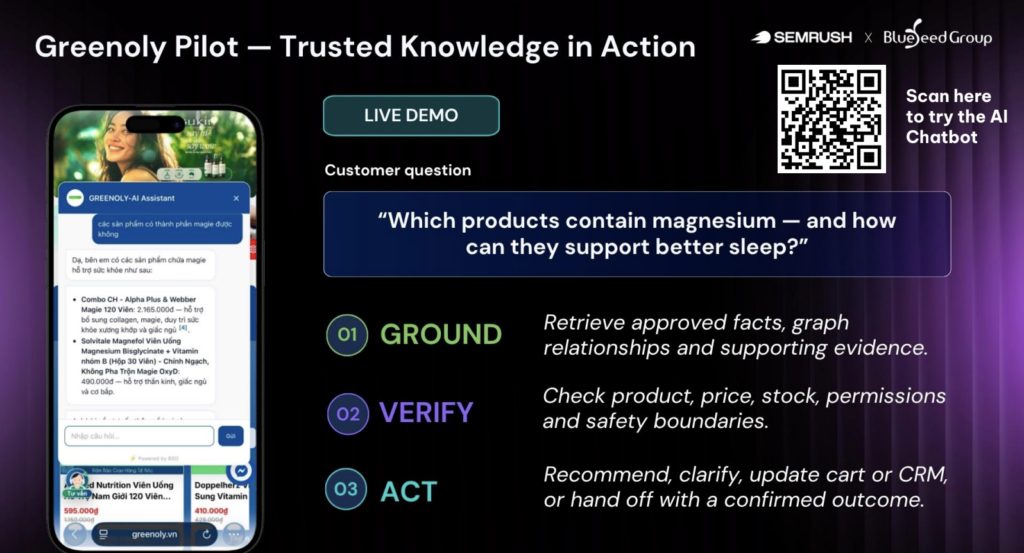
The Greenoly pilot demonstrated how an AI Assistant can retrieve approved product information, verify conditions such as pricing and stock, and then make a recommendation or move the customer toward an appropriate next action.
2. GEO: earning a place in recommended answers
The Blueseed GEO Framework consists of five steps:
- GEO Health Check: understand the brand’s current position, identify AI competitors, and uncover topic opportunities and gaps.
- Prompt Universe Building: discover user questions, organize them by intent and funnel stage, and prioritize high-impact prompts.
- Technical AI Foundation: resolve AI access issues, improve how AI understands the site, and strengthen site performance.
- Content Structure: restructure existing content, fill topical gaps, and produce priority content that AI can readily interpret and cite.
- Trust Signals: strengthen entity, source, and citation signals through Digital PR, seeding, and relevant third-party coverage.
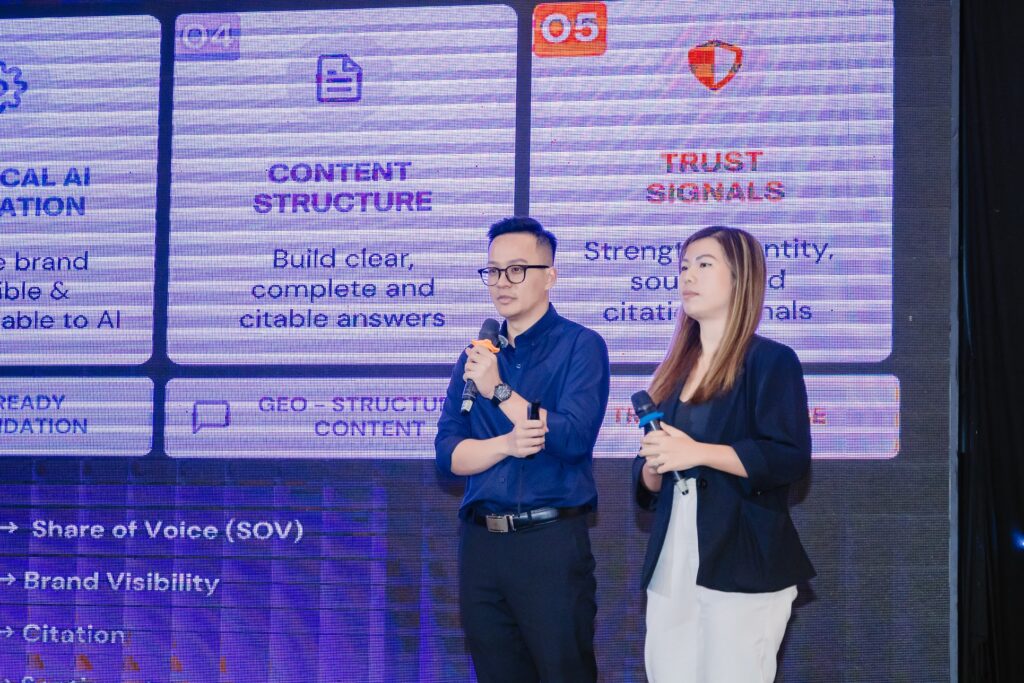
GEO performance can then be evaluated through Share of Voice, Brand Visibility, Mentions, Citations, and Sentiment. The process does not end with a dashboard. It continues through a cycle of Measure – Learn – Prioritize – Improve.
The Navigos Group case study demonstrated measurable results: a 33% increase in Share of Voice in AI Overviews, a 33% increase in Share of Voice in ChatGPT, and a 5% increase in organic traffic.
3. AI Social Selling and Livestream
In the session led by Ma Van Long, Vice President at IHRAI Institute and Founder of iLive, the conversation moved beyond Search and into commerce.
Traditional livestreaming faces three challenges at scale: the host’s depth of brand and product knowledge, human resource constraints, and the loss of valuable data after a live session. AI Live can help standardize knowledge, extend operating hours and languages, and continue processing comments, questions, leads, and buying signals after the stream ends.
The proposed process includes five stages: standardizing data sources, training the knowledge base, creating a Digital Human, operating live commerce, and automating post-live activities such as lead qualification, follow-up, remarketing, upselling, cross-selling, and CRM updates.
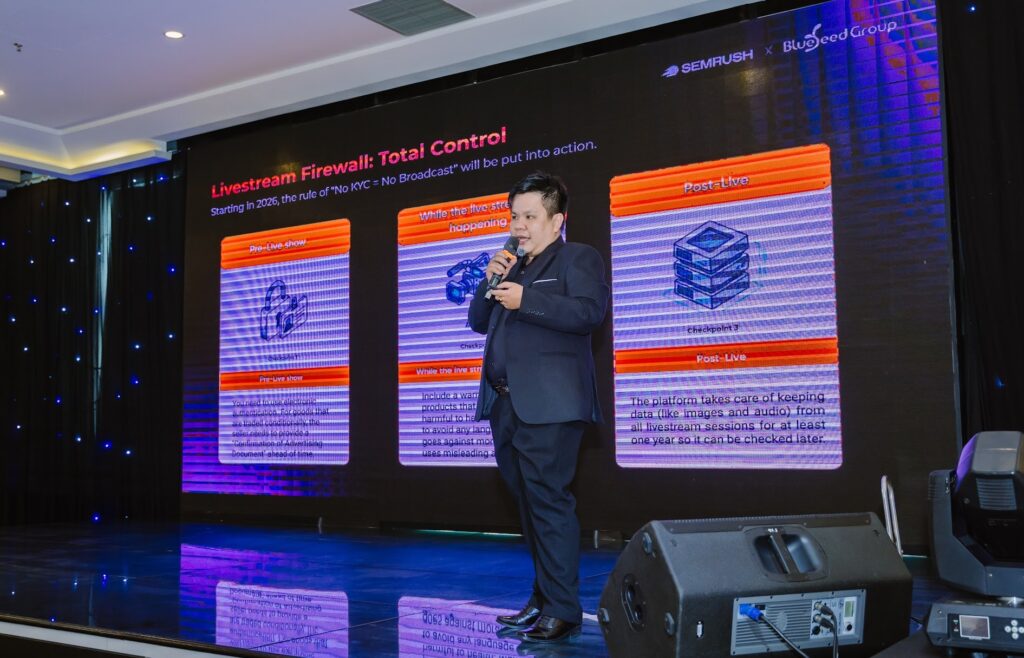
The core takeaway is that AI Livestream should not be treated as merely a “talking avatar”. When connected to data, POS, CRM, and follow-up workflows, it can become a true Commerce Agent.
Growth opportunities must be balanced with compliance. The session highlighted considerations such as identity and KYC, data retention, product warnings, privacy, intellectual property, truthful information, and controls before, during, and after a livestream. Businesses should review the requirements that apply to their operations with qualified legal advisers before implementation.
From measurement to business impact: where should a brand begin?
The event’s key lessons can be translated into five practical questions:
- How does the brand currently appear in AI Search? Establish a baseline across priority prompts and actual AI competitors.
- What does AI understand about the brand? Review the accuracy, consistency, and sentiment of AI-generated answers.
- Which sources are shaping those answers? Identify the websites, publishers, review platforms, communities, and social channels influencing AI outputs.
- Is the data foundation ready? Standardize the Brand Brain, governance, and access permissions before scaling use cases.
- Which business outcome should AI Visibility support? Connect visibility metrics with qualified traffic, leads, conversion, service efficiency, and revenue.
AI Visibility is not a short-term campaign. It is an emerging business capability. Brands that begin building it now will not simply become more visible; they will be better positioned to influence how AI understands, describes, and recommends them at critical moments.
How visible is your brand to AI?
Blueseed’s AI Visibility Health Check helps businesses assess their presence across AI engines, identify competitors and content gaps, and define the GEO priorities most likely to create business impact.
Register for an AI Visibility Health Check with Blueseed Now
![[RECAP] BLUESEED GROUP & OPTIMIND AI: A STRATEGIC ALLIANCE DEFINING THE FUTURE OF BRANDING IN THE AI ERA](https://blueseed.group/wp-content/uploads/2025/11/hello-758x520.png)